Carhartt Winter Shipping Cost Checklist
- Published
- Revised
- Editors
- Marcus Hale · Editor-in-Chief
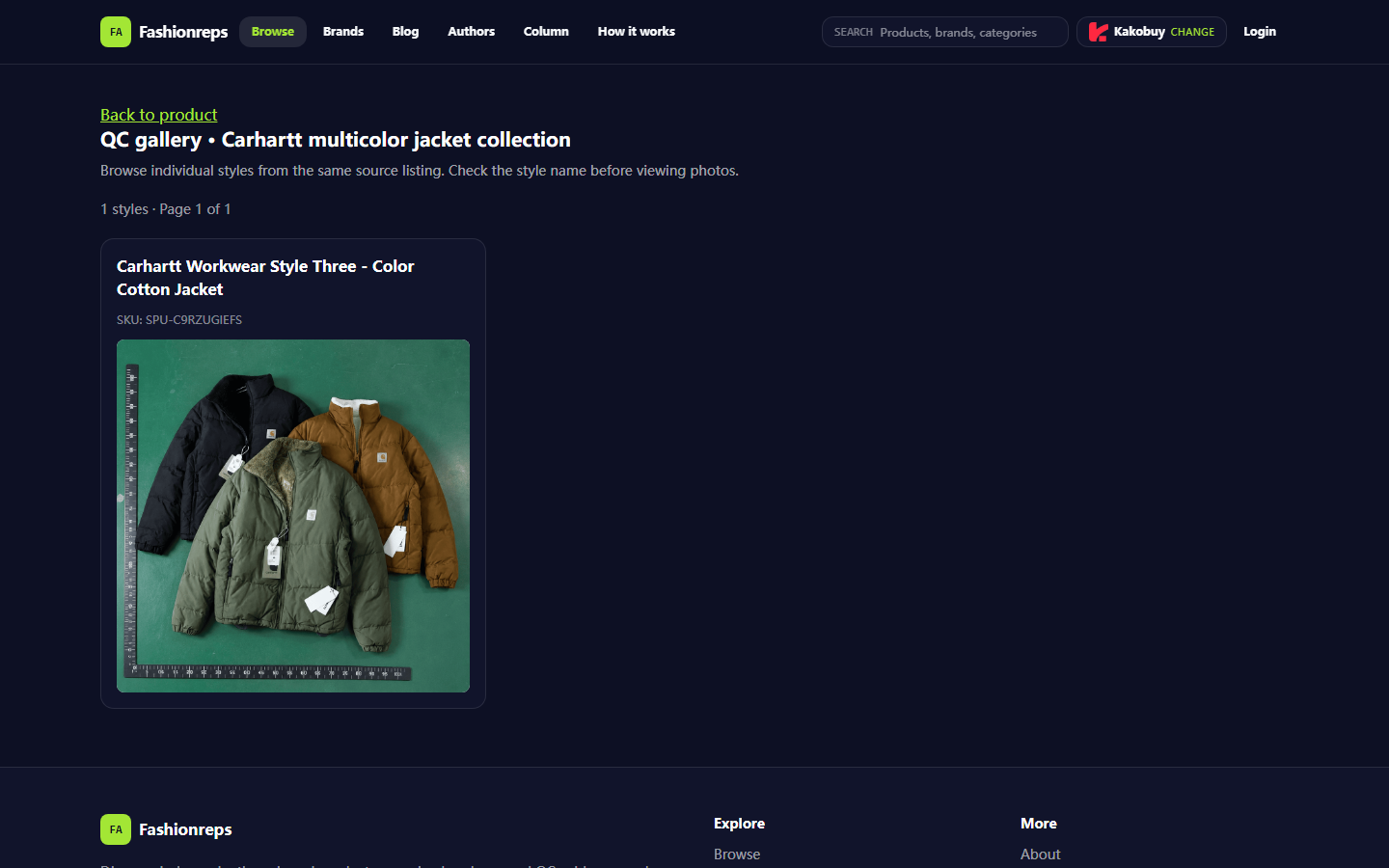
This guide focuses on a specific task: when preparing to ship a Carhartt fall/winter jacket overseas on fashion-reps, first confirm the components of the package cost, then decide whether to proceed with submission. The key is not to estimate a seemingly accurate total price, but to establish a readable and verifiable cost record, avoiding a situation where the product price is clear, but packaging fees, payment fees, volumetric weight, or exchange rate differences appear at checkout. 📦 There i
Editor score 4.2 / 5
This guide focuses on a specific task: when preparing to ship a Carhartt fall/winter jacket overseas on fashion-reps, first confirm the components of the package cost, then decide whether to proceed with submission. The key is not to estimate a seemingly accurate total price, but to establish a readable and verifiable cost record, avoiding a situation where the product price is clear, but packaging fees, payment fees, volumetric weight, or exchange rate differences appear at checkout. 📦
There is currently no destination, package weight, dimensions, carrier rates, payment method, or real-time settlement amounts available for this article, so this article does not provide specific price figures. All amounts should be based on the currency and amounts displayed on the page before submission.

Clarifying the Task of Verifying Carhartt Jacket Package Costs
First, narrow the problem down to one package scenario: a Carhartt fall/winter jacket, entering the purchase or proxy buying process from the product page, ready to be shipped to a designated country or region after inspection at the warehouse.
After completing the verification, buyers should be able to perform the following actions:
- Confirm whether the product amount and quantity match the order record.
- Record the packaging options, package dimensions, and chargeable weight displayed on the warehouse page.
- Distinguish between product price, platform or service fees, payment fees, packaging fees, and international shipping costs.
- Calculate a comparable total cost using the same currency or a clear exchange rate conversion method.
- Pause submission when key fields are missing, rather than guessing based on experience.
This method does not apply to historical packages that have already been paid for and whose fee details can no longer be viewed, nor to situations where multiple items are combined into one package without separately recording each item and package changes. It also cannot replace verification of destination country taxes, import restrictions, or customs clearance requirements. 🌍
Recording Style, Quantity, and Current Visible Price from the fashion-reps Product Page
First, save the visible information from the product page or product record. At minimum, record:
- Product name and style name.
- Order quantity.
- Price and currency displayed on the product page.
- Size, color, or other options displayed on the page that may affect shipping confirmation.
- Query date and page status.
The available data for this article only confirms a collection of Carhartt jackets and their QC page summary, without providing a current product price, stock status, or per-item packaging data that can be cited. Therefore, in the cost table, the product price should be marked as "to be read from the current product page," and should not be filled in with search summaries, old orders, or remembered prices.
If there are multiple styles on the product page, confirm the actual selected style first, then record the quantity. The collection page name cannot automatically replace the specific style name, and images cannot prove material, size, or stock. 🧾
Checking Packaging Options, Package Dimensions, and Chargeable Weight Fields
During the packaging stage, record both actual weight and volumetric weight related fields. Different routes may charge based on actual weight, volumetric weight, or the higher of the two, so you cannot just copy one "weight" field and consider the verification complete.
It is recommended to check in the following order:
- Check whether the warehouse has completed inbound and necessary QC records.
- Record the quantity of items in the package, and whether other items have been added or original packaging removed.
- Record the packaging method, whether compression or reinforcement is used, and whether the corresponding fees are shown on the page.
- Save the package length, width, height, and units; do not mix centimeters, inches, or other units in the same record.
- Record the actual weight, volumetric weight, and final chargeable weight separately; if the page only shows one of them, note the missing field.
- Re-read the page to check for new values after re-weighing, repackaging, or route changes.
If the packaging options have no price description, or the dimensions and chargeable weight only appear in temporary pop-ups that cannot be saved, take screenshots and record the query time. Without such evidence, you should not claim that a particular packaging method is definitely cheaper.
Checking Service Fees, Payment Fees, and Shipping Conditions by Destination
The cost of an international package should be broken down into at least the following parts:
- Product amount.
- Purchase or proxy service fees.
- Warehouse handling, inspection, or packaging fees.
- Payment channel fees or exchange rate markups.
- International shipping costs.
- Possible taxes, customs clearance fees, or delivery surcharges in the destination country.
The destination must be written down to the country or region, and if necessary, the state, province, or postal code, because available routes, billing rules, and additional conditions may differ. Without a destination, it is impossible to determine whether the shipping conditions apply.
When checking shipping costs, confirm:
- Route name and service scope.
- Billing unit and weight range.
- Whether fuel, remote area, or handling surcharges are included.
- Whether destination country taxes are included; if not stated, mark as unknown.
- Any embargoes, restrictions, or special requirements for clothing packaging.
- Validity period of the quote and displayed currency.
Do not write "estimated shipping cost" as the final shipping cost, nor treat the platform's displayed starting price as the actual price for this jacket. If the checkout page does not show the complete fee breakdown, stop submitting the package and confirm the missing items with the service provider first. ⚠️
Recording Currency, Exchange Rate Source, and Query Time Uniformly
Cost comparison must first unify currencies before adding up. When recording, at least keep the original amount, original currency, converted currency, exchange rate source, and query time.
If the platform only displays one currency, but the payment account uses another currency, keep both:
- Original amount on the page.
- Original currency on the page.
- Possible conversion method used by the payment channel.
- Possible currency exchange fees charged by the bank or payment service provider.
- Actual charged amount, to be re-read after payment is completed.
This article does not provide verifiable real-time exchange rates or current currency exchange rules of the payment channel, so no specific converted total price is calculated. Do not use exchange rates without recorded sources, nor treat rounded amounts as actual charged amounts.
Query time should use local date and time, and note whether the fee page has been refreshed since then. When prices, routes, and payment rules change, old records can only serve as historical references and cannot prove the current settlement amount. ⏱️
Re-reading the Final Amount Breakdown from the Checkout or Shipping Page
Before submission, re-read the amounts from the checkout page or shipping confirmation page, rather than relying on previously copied estimates. It is recommended to establish a corresponding record from the product page to the checkout page:
- Product page: style, quantity, product price, and currency.
- Warehouse page: number of packages, packaging method, dimensions, actual weight, and chargeable weight.
- Shipping page: destination, route, shipping cost, additional conditions, and quote time.
- Payment page: service fees, payment fees, exchange rate description, and total amount due.
- Checkout confirmation: final amount due, currency, order status, and downloadable receipt.
If the amounts, currency, or weight on any of these pages differ from the previous page, mark the discrepancy and re-verify. Common discrepancies include weight changes after repackaging, chargeable weight rounding, route selection changes, payment channel markups, and different ways of displaying taxes.
Only when the fee breakdown, applicable conditions, and final total can all be re-read from the current page is it appropriate to proceed with submission. After submission, still save the order number and fee receipts, but do not publicly share screenshots containing addresses, phone numbers, payment information, or complete waybills.
Stop Conditions When Current Fees or Packaging Evidence Are Missing
If any of the following situations occur, pause and do not submit the package:
- No clear destination.
- No current product price or product currency.
- Only estimated weight, without final chargeable weight.
- No package dimensions, and the route may charge based on volumetric weight.
- Packaging or handling fees do not show amounts or applicable conditions.
- The shipping page does not specify the route, billing unit, or quote time.
- The payment page's currency conversion method and additional fees are unclear.
- The settlement amount cannot be broken down, or changes occur without explanation after refreshing.
- The page status is unstable, and current evidence cannot be saved.
Stopping does not mean the order has failed, but that the current evidence is insufficient to support cost judgment. You can save drafts, screenshots, and query times, and wait for the warehouse weight or shipping page to update before continuing. 🔎
Saving Evidence and Deciding Whether to Proceed with Submitting the Package
The final decision should be based on a reviewable fee record, not a single total price. At minimum, keep the corresponding evidence from the product page, warehouse packaging information, chargeable weight, shipping conditions, payment fees, exchange rate records, and the final checkout page.
Combining packages is only worth considering when sample data supports it. It may reduce repeated fixed operational costs, or it may become more expensive due to increased total volume, volumetric weight, package value, or single-loss risk. Splitting packages may increase fixed costs, but be more suitable in terms of route restrictions, weight limits, or risk diversification. Without current package data, it cannot be claimed that either approach will definitely save money.
The suitable audience for proceeding with submission is buyers who have confirmed the destination, can read the current product and packaging fields, and can re-read the final fee breakdown from the checkout page.
It is not recommended to proceed when: key amounts come from old screenshots or others' experiences, packaging and chargeable weight have not been confirmed, tax liabilities are unclear, or the payment page cannot explain exchange rates and additional fees.
The conclusion of this verification record is: in the absence of current product prices, destination, package dimensions, chargeable weight, route rates, and final settlement evidence, no specific total price is output, and direct submission is not recommended.
Community feedback 0 reviews
No approved reviews yet.