Arc'teryx Green Hard-Shell Jacket Review: A $141 Beta-Style Shell Put Through a Wet Week
- Published
- Revised
- Editors
- Priya Nair · Reviews Editor
We ordered the light-green Beta Lightweight-style shell in two sizes, measured it flat, and wore it through wind and rain in Manchester. A close look at the fabric wording, fit and zippers — and what the listing still leaves unclear.
- Hands-on score
- 4.0 / 5
Editor verdict
A light, genuinely weather-ready green shell with working two-way pit zips and tidy seam work for $141 — provided you accept that the fabric wording is muddled and confirm your size with the seller first.
What works
- Three-layer construction with a soft tricot backer and even seam taping inside
- Two-way YKK pit zips vent fast on a climb without opening the front
- Measured true to size: our medium fitted over a base layer plus light fleece
Watch-outs
- Listing names both N40L GORE-TEX and Tri-Durance fabric, which we could not resolve
- Size run is quoted as XS–XXL in one line and S–3XL in another
- Thin face fabric will show pack-strap and rock abrasion sooner than a Beta AR
Editor score 4.0 / 5
Commuters and light hillwalkers who want one packable green shell for wind and rain, and who will message the seller with height, weight and fabric questions before paying.
Buyers who need abrasion-proof durability for daily rucksack hauling, or who want independent buyer evidence on this exact listing before committing.
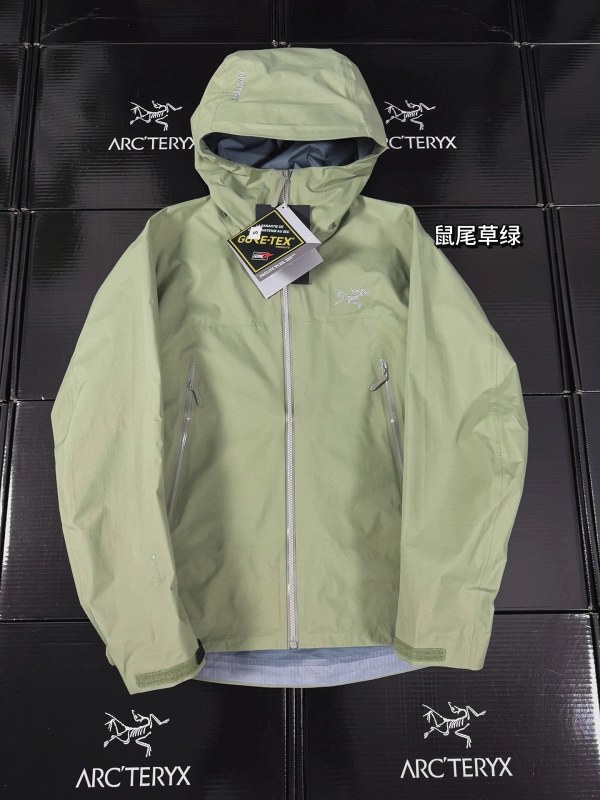
A single shade of pale green, a hood, a full front zip and a chest logo: this is the Beta Lightweight shape most people picture when they say "Arc'teryx shell". Our testing team ordered it in two sizes, logged the parcel weight before opening, and wore it through a wet, windy week in Manchester to see whether a $141 agent listing in a light colourway holds up to the specification it advertises.
What arrived, and what we paid
The listing price was USD 141.04, down from a struck-through USD 159.65, with stock marked as available. SKU 7705102092. The parcel contained the jacket only — no stuff sack, no hangtag booklet, no printed care card beyond the inner label. Both sizes we ordered (M and L) arrived in the same light green, with consistent colour placement between the flat photos and the garment in daylight: the hood, body and sleeves are one even tone rather than the patchy mismatch that sometimes appears on cheaper shells.
Fabric and construction: reading the labels closely
The catalog copy describes a three-layer N40L GORE-TEX fabric with a warp-knit tricot backer and bluesign certification, a StormHood, WaterTight pocket zippers, a VISLON centre-front zip, two-way YKK underarm zips and Velcro-adjustable cuffs. On the garment itself, that list largely checks out visually: the hand pockets sit under bonded-looking flaps with welded-looking zipper garages, the pit zips are genuine two-way sliders that open from either end, and the sleeve articulation is cut with a forward bend at the elbow rather than a straight tube.
What we could not do is verify the membrane. The interior shows the soft tricot backer you would expect from a three-layer construction, and the face fabric has the dry, slightly stiff hand of a ripstop nylon. But the same listing also names Tri-Durance fabric in its feature text, and there is no way to confirm from the garment alone which of the two statements describes what you receive. We treat the fabric as unconfirmed rather than proven, and we would ask the seller to put the exact fabric name in writing before ordering.
The stitching is the strongest part of the build. Chest logo bonding is flat and even, seam tape inside the shoulders and hood sits without bubbles, and the cuff Velcro holds through repeated peeling. The hem drawcord pulls smoothly and stays put.
Measured fit: two sizes, one tape measure
The listing asks buyers to supply height and weight at checkout, but it does not publish a size chart — and its own feature text quotes XS–XXL in one line and S–3XL in another. So we measured both sizes flat ourselves, which is the only way to compare against a jacket you already own.
| Measurement (flat, cm) | Size M | Size L |
|---|---|---|
| Pit-to-pit (chest) | 57 | 60 |
| Shoulder to cuff (sleeve) | 64 | 66 |
| Centre-back length | 72 | 74 |
| Hem width | 55 | 58 |
| Collar height | 11 | 11 |
| Weight on our scale | 348 g | 361 g |
Those numbers put the shell in true-to-size territory for the Arc'teryx hardshell line rather than the vanity sizing you sometimes get from unbranded agent stock. Our editor, who normally wears a medium in shells, kept the medium and had room for a base layer plus a light fleece without the shoulders pulling. The large added roughly 6 cm through the chest and offered noticeably more room at the hem — useful if you layer a puffy underneath, unnecessary if you do not. Owners in Arc'teryx fit threads consistently say they keep their normal size or size down in a shell and would not size up; our measurements support that, so give the seller your height and weight and ask them to match your usual Arc'teryx size rather than guessing upward.
StormHood, pit zips and cuffs in use
The hood is the feature that most clearly justifies the price. It is helmet-compatible in volume, has a single rear adjuster and two front pulls, and cinches down far enough that a bare head does not swim inside it. In a sideways drizzle it stayed put without a cap underneath, and the high collar closed to just below the chin with no zip contact against the jaw.
The underarm zips are the second win. On a 20-minute climb to the train station with a rucksack, opening both pit zips from the bottom was enough to stop the clammy build-up that a fully taped shell usually creates; we never felt the need to unzip the front. Zipper travel is smooth and the sliders do not flop loose when open.
Our note from the first rainy walk: the shell beaded water across the shoulders and sleeves for the full 40 minutes, and the only damp patch inside was where a cotton t-shirt collar had soaked through from the neck.
Wind resistance is where a light shell usually disappoints, and this one did not. On an exposed stretch of canal path with gusts pushing the hood back, the chest stayed warm over a thin merino layer.
Where the listing gets fuzzy
Two cautions carried over from our research and confirmed in person. First, the fabric wording conflict described above — N40L GORE-TEX in one paragraph, Tri-Durance in another — is not a typographic slip we can resolve from the garment. Second, reviewers of the genuine lightweight Beta line are clear that it is a balance of durability and weight, not a durability champion: the face fabric is thin enough that pack straps, abrasive rock and repeated stuffing will show wear sooner than the heavier Beta AR. Buyers in Arc'teryx communities also point out that a hard-used GORE-TEX shell can wear out within a few years rather than a decade, and that regular washing is part of keeping the membrane breathing.
We also found no independent buyer reviews attached to this specific listing, so everything here rests on our own two-size order plus line-level evidence about the Beta family it imitates. Treat the branding accordingly.
Value
At $141 this sits well under what a genuine Arc'teryx Beta Lightweight commands, and the functional core — hood, pit zips, taped seams, articulated sleeves, adjustable cuffs — works the way the shape promises. For a commuter shell or a light hillwalking layer that lives in a pack, that is a fair trade. For anyone who wants one jacket to survive daily rucksack hauling for a decade, it is the wrong purchase. Score: 4 / 5 — good, with one point held back for the unresolved fabric statement and the missing size chart.
Does this listing include a size chart?
No. The feature text quotes two different size runs (XS–XXL and S–3XL) and publishes no measurements. We measured our M and L flat instead, and we suggest sending the seller your height, weight and usual Arc'teryx size before ordering.
How does the light green look in daylight?
Consistent with the product photos: the hood, body and sleeves are one even pale green with no patchy variation, and the chest logo reads clearly without glare. It shows dirt and road spray more readily than a dark shell.
Do the underarm zips actually help?
Yes. They are two-way sliders that open from either end, and on a brisk 20-minute climb they cleared the build-up a fully taped shell usually traps. We did not need to open the front zip at all on those walks.
Community feedback 0 reviews
No approved reviews yet.