Real Madrid Jersey Print Care: Heat Transfer vs Evidence
- Veröffentlicht
- Überarbeitet
- Redakteure
- Marcus Hale · Editor-in-Chief
Bottom Line First This Real Madrid purple retro short-sleeve jersey's product page indicates it's a fan version, with the shell described as a cotton-polyester blend, and suggests the print may use heat transfer. The page also advises avoiding prolonged sun exposure, washing inside out, and air drying. These instructions provide a reliable basic care approach, but cannot prove how long the number print on this sp
Redaktionsnote 4.2 / 5
Bottom Line First
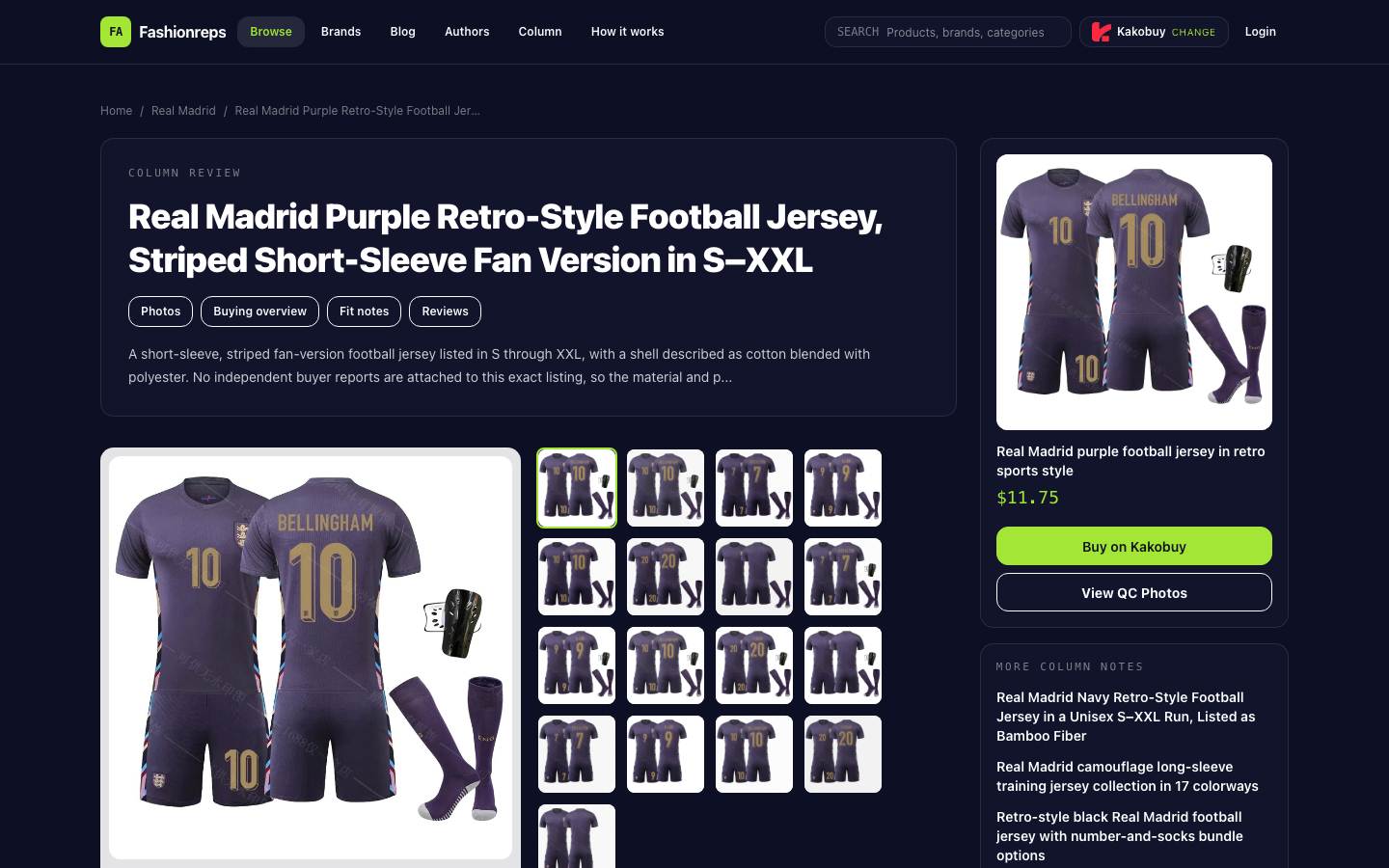
This Real Madrid purple retro short-sleeve jersey's product page indicates it's a fan version, with the shell described as a cotton-polyester blend, and suggests the print may use heat transfer. The page also advises avoiding prolonged sun exposure, washing inside out, and air drying.
These instructions provide a reliable basic care approach, but cannot prove how long the number print on this specific jersey will last. The current page lacks independent buyer reviews, so actual durability, adhesive thickness, bonding strength, and changes after multiple washes cannot be confirmed from catalog text alone.

First Confirm Which Print You Actually Received
Before ordering, check the product page options for color, number, and version. The page title points to the purple Real Madrid retro style, but the selectable color text also mentions national team jerseys, so you cannot determine the final shipped style based solely on the title.
After arrival, inspect the numbers and letters without stretching the fabric:
- Check if the print edges are neat, with any obvious lifting, bubbles, or missing adhesive.
- Observe whether the number surface is a thin flat film or has noticeable thickness and three-dimensional layering.
- Check that the number color, position, and font match your selected options.
- Take overall and close-up photos upon arrival, and keep records of the order, options, and product page.
These checks only record the appearance and cannot replace laboratory testing or definitively determine the print material or lifespan.
More Reliable Washing Steps
1. Turn Inside Out Before Washing
Turn the jersey completely inside out so the numbers and letters are on the inside as much as possible. This reduces friction between the print and the washing machine drum, other clothes, zippers, and buttons.
If there is sand, mud, or obvious stains, gently shake them off or rinse locally with cold water first. Do not scrub the number surface repeatedly with a stiff brush.
2. Prefer Cold Water and Gentle Cycle
The page recommends washing inside out but does not provide complete care label information. Therefore, a conservative approach is to use cold or low-temperature water and a gentle cycle, avoiding washing with jeans, garments with zippers, or rough towels.
Do not assume it can withstand high-temperature washing just because the page mentions a cotton-polyester blend. The blend ratio, dye stability, and specific parameters of the print adhesive are not specified in the current evidence.
3. Avoid Pouring Detergent Directly on the Print
Detergent should be fully dispersed in water before adding clothes, to prevent concentrated detergent from sitting on the number surface. Do not use bleach, strong stain removers, or aggressively scrub the print unless the actual garment care label explicitly allows it.
4. Do Not Wring the Number Area
After washing, do not grab the numbers or letters to wring them out, and do not rub the print vigorously. Gently squeeze out excess water, then blot with a clean towel, keeping the garment as flat as possible.
5. Air Dry Inside Out, Avoid Prolonged Sun Exposure
The page explicitly recommends air drying and reminds to avoid prolonged sun exposure. When drying, keep the inside out and place in a ventilated area, avoiding direct exposure of the print side to strong sunlight.
Do not use high-temperature drying, iron directly on the print, or leave the jersey in high-temperature or strong light environments such as a car or window for long periods. Current information only supports avoiding prolonged sun exposure; it cannot confirm any specific safe drying or ironing temperature.
If Problems Arise, Stop Washing Further
If any of the following occur after the first wash, do not immediately wash again or attempt forceful repairs:
- Number edges start lifting or partial adhesive loss.
- Print surface shows obvious cracks, bubbles, or sticking.
- Letters or numbers shift position.
- Color transfers to the garment or other clothes.
- Large areas separate between print and fabric.
Lay the garment flat and take clear photos of the overall condition, close-ups, and the washing process for records, then compare with order options and product page. Do not tear off loose parts, apply glue yourself, or press with high heat, as this may destroy the original state needed for further judgment.
What the Evidence Can and Cannot Support
| Currently Confirmable Information | Currently Unconfirmable Information |
|---|---|
| Page describes it as short-sleeve fan version, sizes listed S to XXL | How many washes the number print will survive intact |
| Shell described as cotton-polyester blend | Specific material, thickness, and temperature range of heat transfer adhesive |
| Page hints heat transfer prints usually need to avoid prolonged sun exposure | Whether this specific item has undergone independent durability testing |
| Page recommends inside-out washing and air drying | Whether actual care label allows machine washing, drying, or ironing |
| Current page has no independent buyer reports for this item | Whether numbers will definitely crack, fade, or peel |
Therefore, the safest judgment is not "this jersey is definitely wash-resistant" but "in the absence of independent durability evidence, use low temperature, inside-out, gentle cycle, air drying, and check the print after each wash."
A Directly Executable Inspection Sequence
- Before ordering, confirm color, number, and version options; don't rely solely on the title.
- After arrival, take photos and inspect print edges, position, and surface condition.
- Before first wash, turn inside out, remove hard objects from pockets, and separate from rough garments.
- Use cold or low-temperature gentle cycle, avoiding bleach and local strong friction.
- After washing, gently squeeze out water; do not wring the number area.
- Air dry inside out in a ventilated area; avoid prolonged sun exposure and high-temperature treatment.
- If lifting, cracking, or peeling occurs, record evidence and pause further processing.
If you need sports competition-level long-term durability, the current page evidence is insufficient to support that judgment. It should be treated as a low-priced fan version garment requiring careful washing, rather than taking the catalog's print description as a verified performance promise.
Den vollständigen Hinweis lesen →
Rückmeldungen 0 Bewertungen
Noch keine freigegebenen Bewertungen.